S5: Emerging Opportunities & Technologies
June 12th, 2026
Location
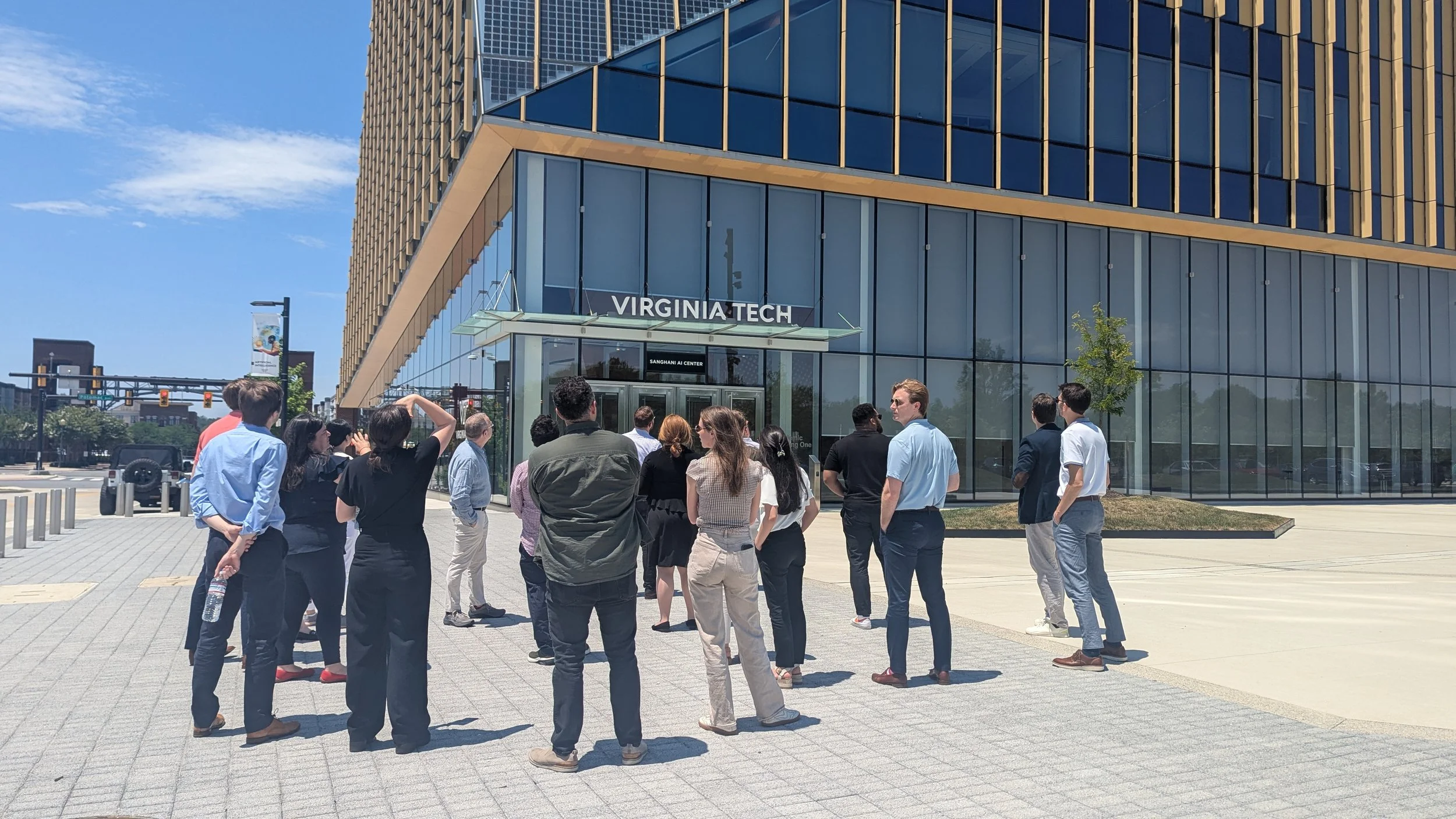
Virginia Tech Academic Building One
3625 Potomac Avenue, Alexandria, VA 22305
Led by
Kelly Haley, AIA, LFA
Peter He, LEED AP BD+C
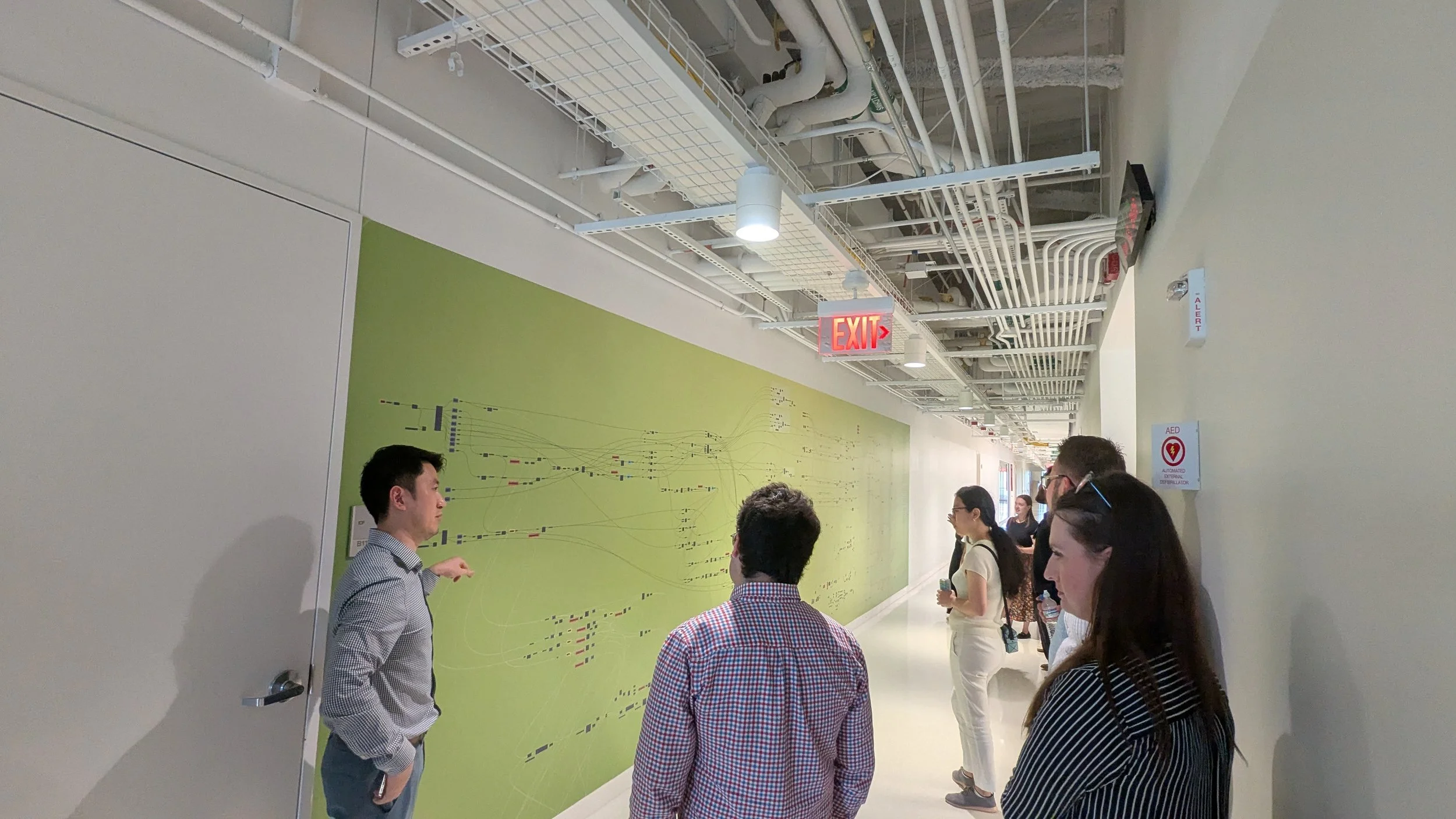
This session explored the rapidly evolving landscape in architectural practice through a series of engaging and immersive experiences. The day began with a building tour of Virginia Tech Academic One Building, which showed first hand leading technologies creating building form and innovative spaces. The session followed with “Tech Talks” that provided a brief introduction of several emerging technologies and tools that are actively used in practice today. The session ended with a panel that brought together all speakers discussing where they feel the profession is heading and offered advice on the ever-evolving profession.
Act 1: Virginia Tech Academic Building One Tour
Kevin Johnson, AIA, LEED AP
Patricia Halaby, AIA, LEED AP
The session began with a brief presentation of behind the scenes of the Virginia Tech Academic building. Kevin and Patricia guided the scholars through the evolution of the facade and building program.
Timon Hazell
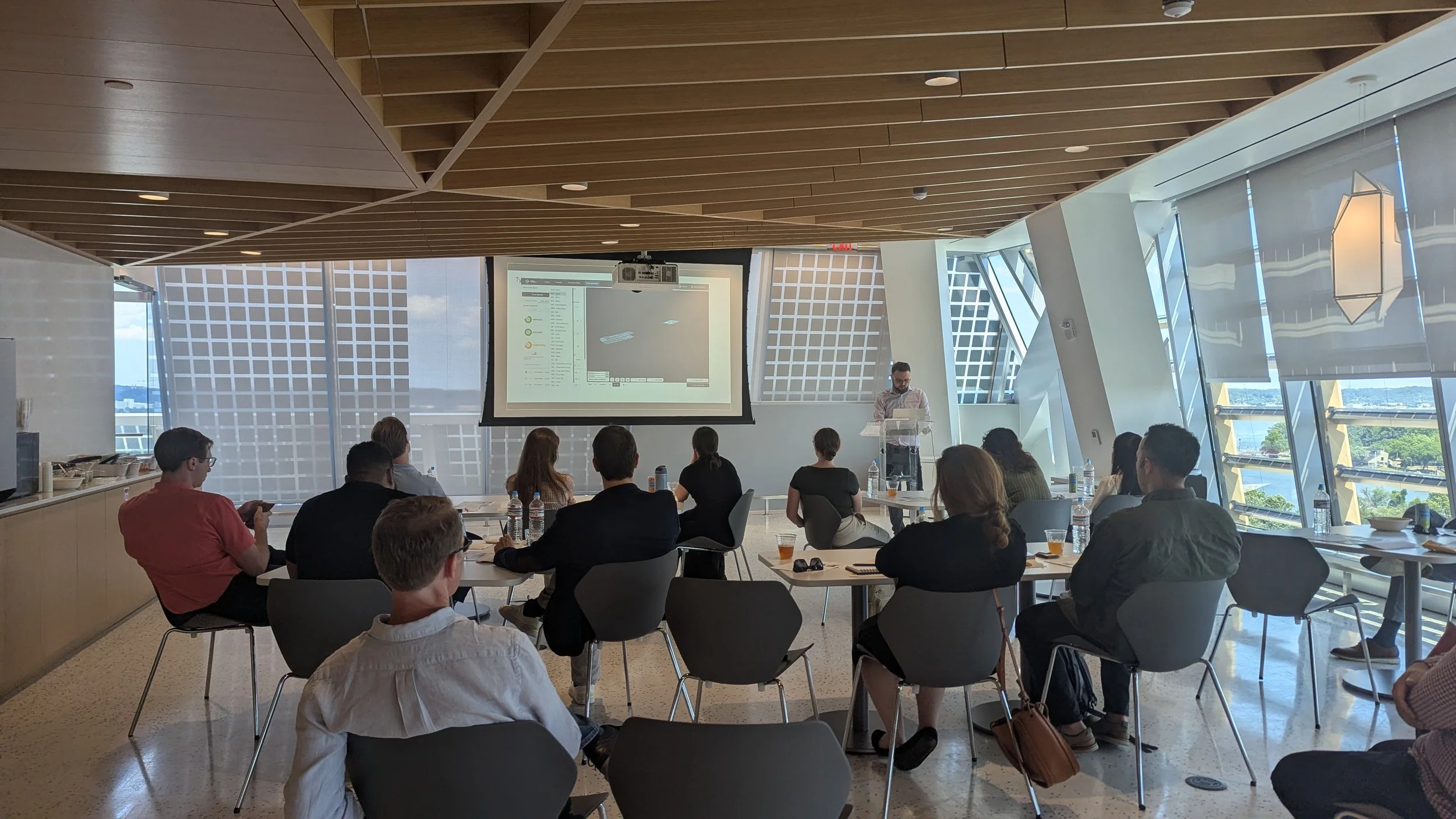
Timon’s presentation focused on practical AI examples and our mindset with AI and the architectural profession. He compares the two with a chainsaw: powerful tools accelerate output but require skilled operators and careful iteration. Timon explains that AI can be used, even in the DoD, with integrated gates, checks, and automated pipeline. AI has a place but not without a human to validate. AI can be an extremely valuable tool to help assist in design through practical applications like Revit. The goal with AI is to define pain points, solve the known problems first, use experimental tools for niche needs, and scale only when warranted.
Act 2: Tech Talk #1 - Think Outside the Blueprint
Rob’s presentation focused on his observations in the profession that technology transitions are now constant and the distance between transitions has shortened. He warrants that we should be viewing workflows as an ecosystem: a change in how platform affects documentation, coordination, permission, issue-tracking, owner access, and long-term records. He suggests four leadership behaviors for effective adoption: (1) communication: explain the what and why, the purpose behind the change; (2) empathy: acknowledge different user experiences and fear of the unknown; (3) incremental adoption: pilots, phased rollouts, office hours and repeatable guidance; (4) champions: trusted peers drive adoption more effectively than top-down announcements. Rob summarizes by saying adoption is people adoption, a tool’s value appears when people trust and can use it under real project conditions. The roles within our profession are changing and design-technology leaders act as translators, facilitators, strategists and cultural leaders - not only software experts.
Rob Fink, AIA
Act 3: Tech Talk #2 - Change Management & Technology Leadership
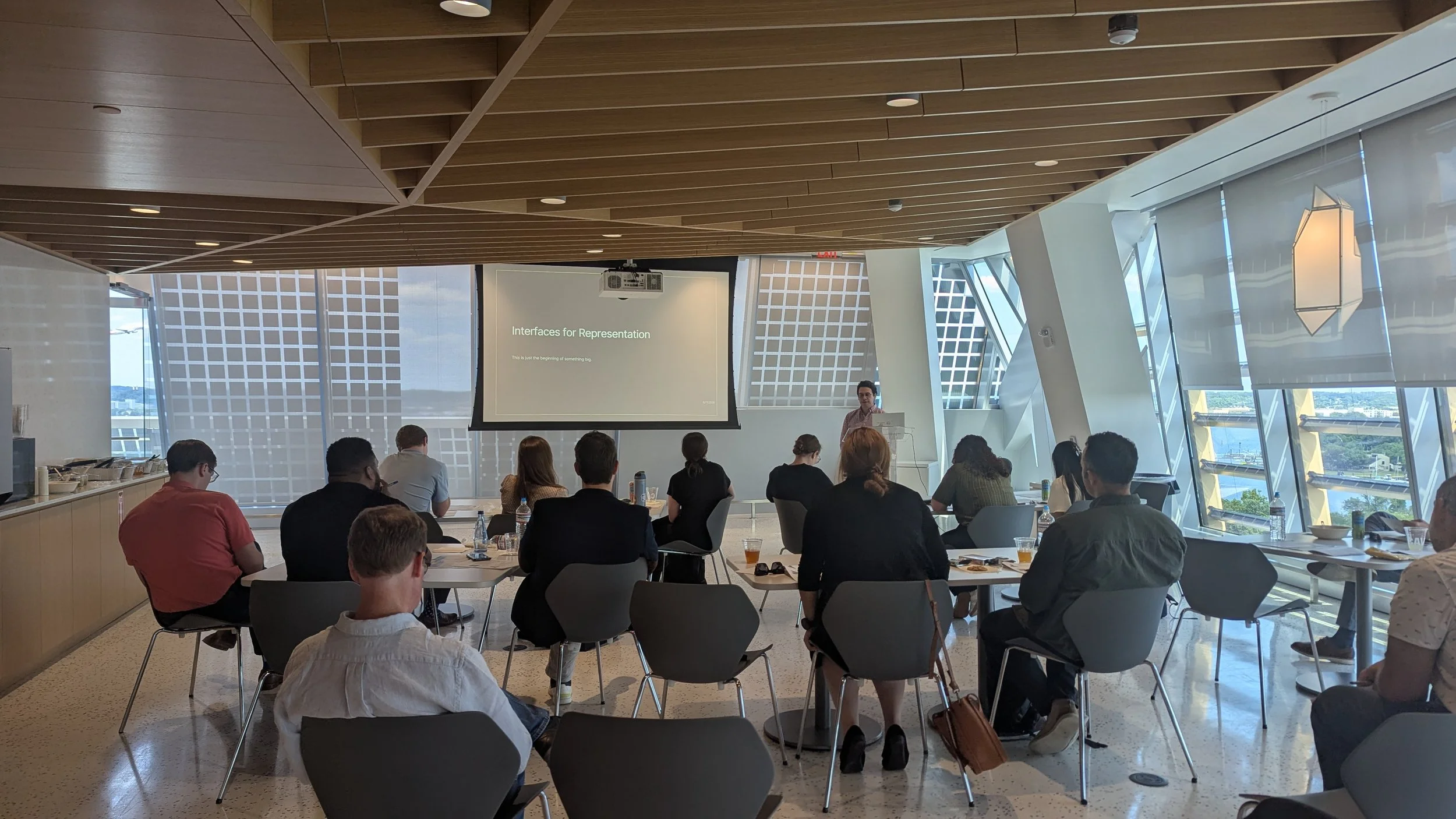
Daniel’s Tech Talk focused on the power of LLMs and generative AI. He theorizes that the models enable fast creation of disposable interfaces, images, and increasingly 3D content for early visualization and concept development. He presented XFigura platform capabilities which consists of an infinite canvas for a collaborative interface for early-stage design; a chatbot that can generate images, annotations and web or portfolio outputs; two-way integration with existing 3D tools; and progress with 3D integration like generative point-clouds. Looking forward, generative AI is self-improving systems and agents that link LLMs to APIs/tools to automate workflows while preserving designer judgment.
Daniel Escobar
Act 4: Tech Talk #3 - Generative AI
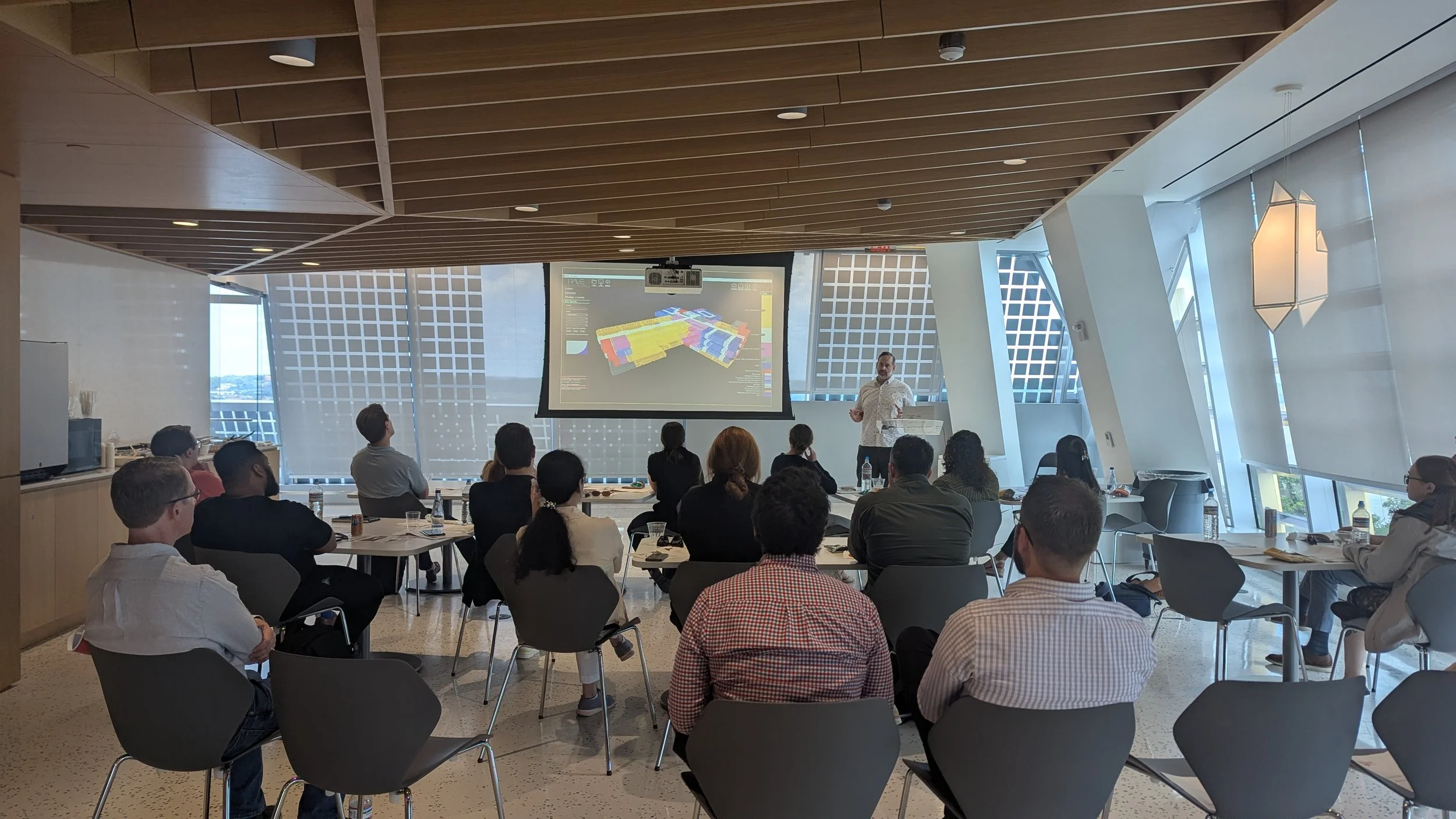
David walked the scholars through the AI tools and workflows that are used in practice, specifically at SmithGroup. The tools they use revolve around data quality and organization. David enforced that AI benefits when underlying data is vetted and structured, echoing previous presentations that human integration is integral. He emphasized that data AI collection requires standards, nomenclature and consistent naming for optimal output. A consistent theme in David’s presentation is garbage-in equals garbage-out.
David Fersh
Act 5: Tech Talk #4 - Getting Beyond AI Slop
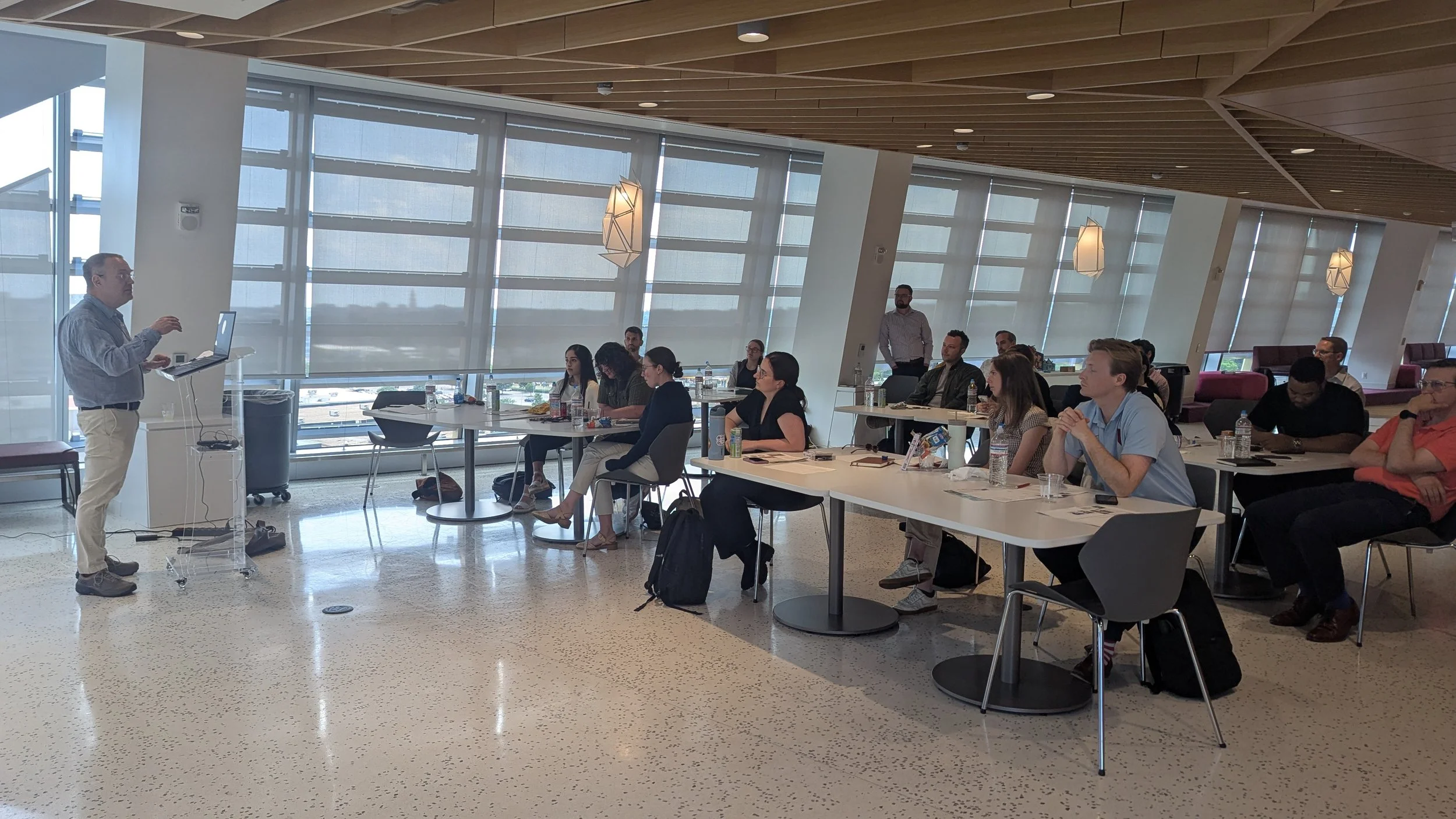
Andrew walked the scholars through his professional path and how his path may have differed from the typical architectural path. His profession began in fabrication, in the fabrication lab of Ole Lundberg. After this experience, he moved on to more conventional practices for about ten years where he entered the recession and eventually ended up at Catholic University in the fabrication shop.
Andrew Cocke
Act 6: Tech Talk #5 - An Unusual Path
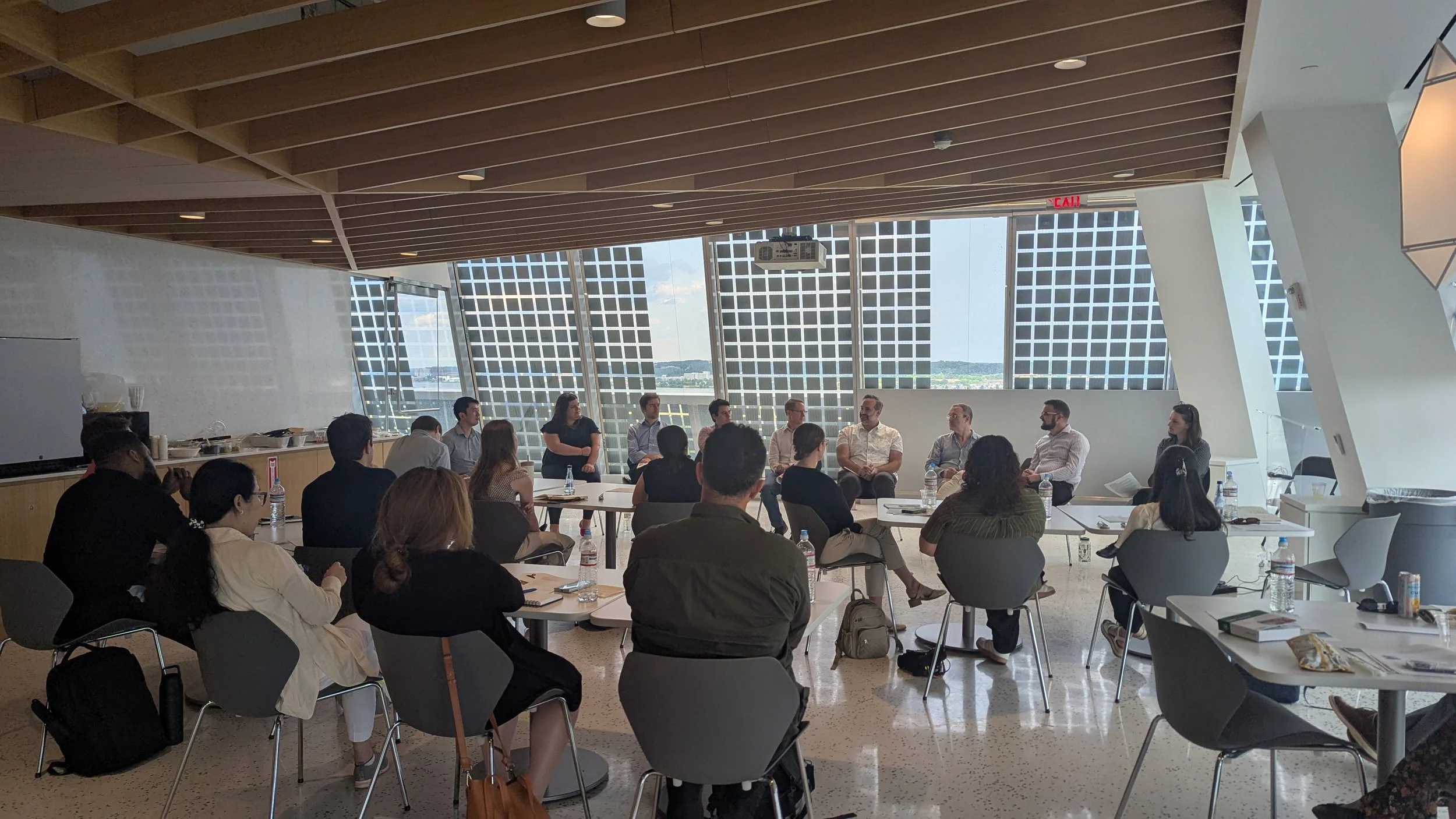
Kelly opened the panel with a question to all speakers: what are they excited for the future in AI tools or products? All the speakers agreed that the team systems and data collection are the forefront and will be the most effective for the profession. The discussion ventured into the concerns of educational development with the prediction of how the profession will change with further AI integration. The key from the speakers’ perspective is to continue to reinforce the foundation of design and AI is purely a tool and resource to help with a visualization of the material output. The concern of data centers impact on the environment is not being studied enough on how to divert the impact. Training and inference for large ML models consume significant energy; the sector should assess data center impacts and sustainability trade-offs. In conclusion, AI will accelerate iteration, storytelling, and optimization but will not replace the need for human judgment, constructability, and mentorship. Teams should be adaptable, curate data, and build trusted networks to navigate change.
Timon Hazel, Rob Fink, Daniel Escobar, David Fersh, and Andrew Cocke
Act 7: Open Panel Discussion


Thank You to the 2026 Session 5 Sponsors