S1: Leading Together
February 20th, 2026
Location
Lower Level Conference Room
1350 I Street NW, Washington DC, 20005
Led by
Andrea Nichols, AIA, LEED Green Associate
Megan Davey, AIA, WELL AP
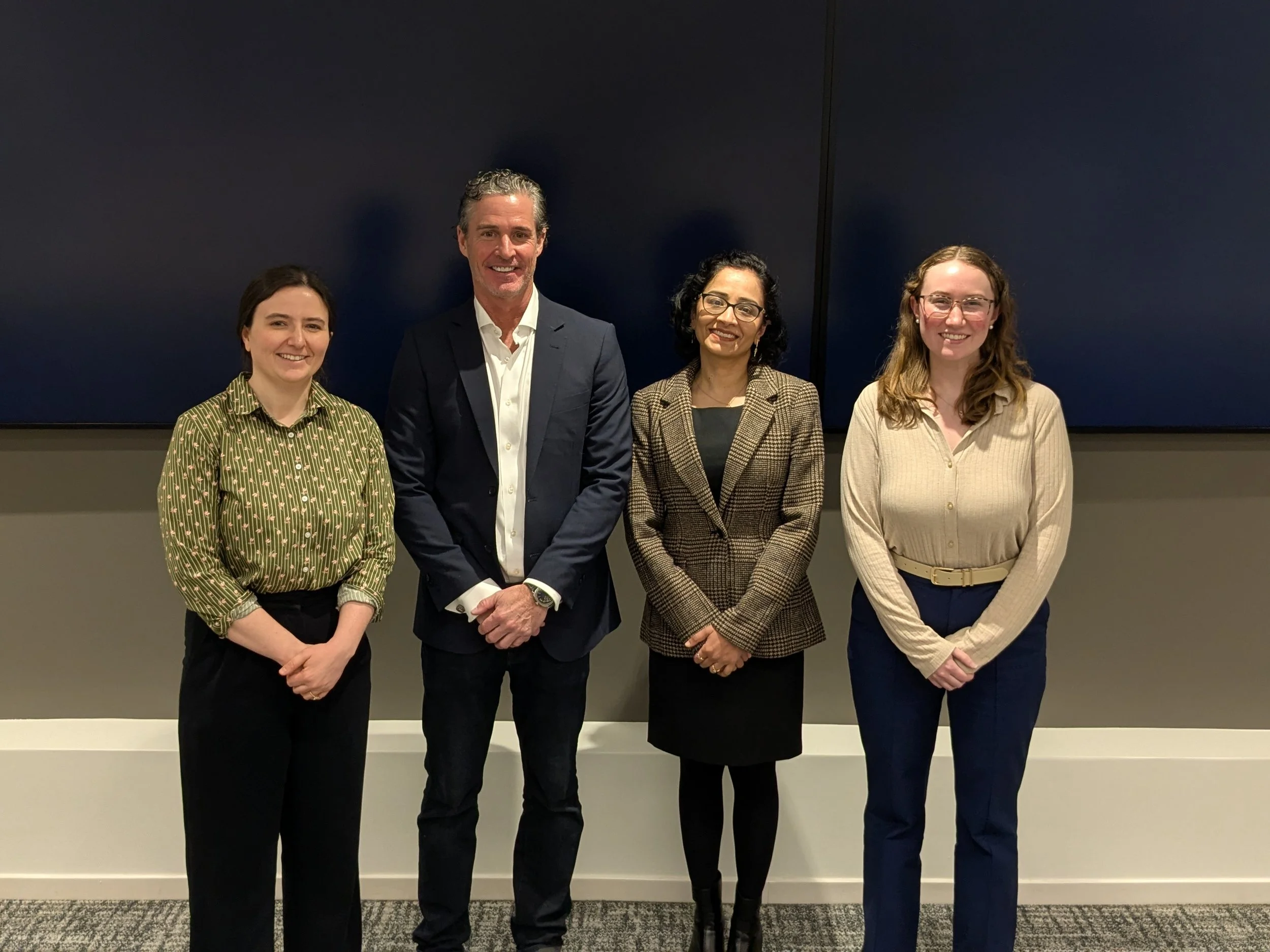
The “Leading Together” session explored leadership through three connected perspectives: self-awareness, creativity, and collaboration. In Leadership Inside, participants examined their own constructive, passive, and aggressive thinking styles using the Lifestyles Inventory to better understand their strengths and areas for growth. Leadership Outward built on this foundation by exploring how creative ideas are formed, communicated, and successfully implemented within organizations. Finally, Leadership Together reinforced these concepts through the Unseen Sketch exercise, demonstrating how communication style and leadership approach directly impact team understanding and outcomes. Together, the three presentations emphasized that effective leadership begins within the individual and is realized through clear communication and collective action.
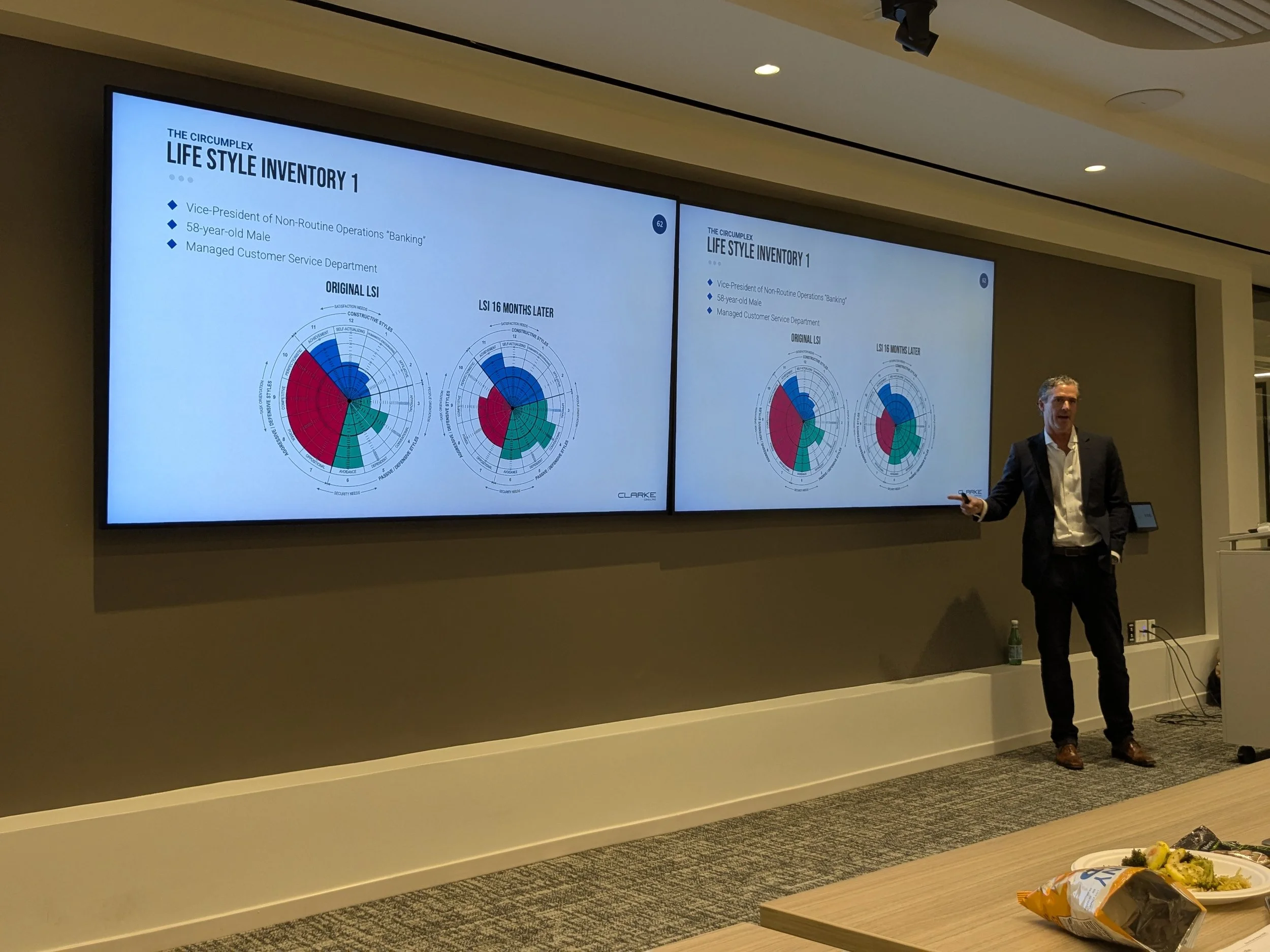
Act 1: Leadership Inside: LSI - Lifestyle Inventory
Cable Clarke
Presentation #1 was led by Cable Clarke, a specialist in organizational dynamics. This presentation focused on the Leadership Inside activity using the Lifestyles Inventory (LSI) assessment. Before the session, participants completed a self-evaluation, and during the presentation Clarke discussed the LSI's purpose, which measures how individuals' thinking patterns influence their behavior, and explained how the LSI results help identifying constructive, passive defensive, and aggressive defensive styles, which impacts organizational culture, leadership effectiveness and team’s performance. The activity helped participants recognize their personal strengths and behavioral tendencies while also identifying areas that may limit their effectiveness as leaders. Clarke emphasized that leadership development begins with self-awareness and that understanding one’s behavior can improve communication, decision-making, and team management. Examples from various companies illustrated how different cultures influence leadership behaviors. Overall, the presentation showed that stronger organizations are built when leaders intentionally reflect on and adjust their own actions and attitudes.
Vijaya Venkataramani, PhD
Presentation #2 featured Dr. Vijaya Venkataramani from the University of Maryland and focused on Leadership Outward: Creative Ideas & Leadership. She presented research on how creativity develops within organizations emphasizing that creativity is not innate but teachable. She debunked myths such as the nature vs. nurture, Eureka, originality, and brainstorming myths, highlighting that creativity involves iterative processes and collaboration. The presentation introduced the "three C's" for fostering creativity: challenging assumptions, connecting and teaming up, and creating safe spaces. It also stressed the value of multiple perspectives and slow multitasking in enhancing creative problem-solving while highlighting that creativity is often enhanced by diverse interactions, challenging assumptions, working with people who don't share the same expertise, having loosely connected networks, constructive conflict, and externalizing ideas through rough prototypes. Leaders should create safe spaces for experimentation and failure, and avoid an overly economic mindset.
The discussion also addressed the "innovation gap," where good ideas are often prematurely rejected by managers due to aversion to uncertainty and a focus on feasibility. Dr. Venkataramani highlighted strategies both employees and leaders can use to better communicate, advocate for, and support new ideas. Overall, the presentation reinforced that effective leadership requires not only generating creative ideas but also creating an environment where those ideas can thrive.
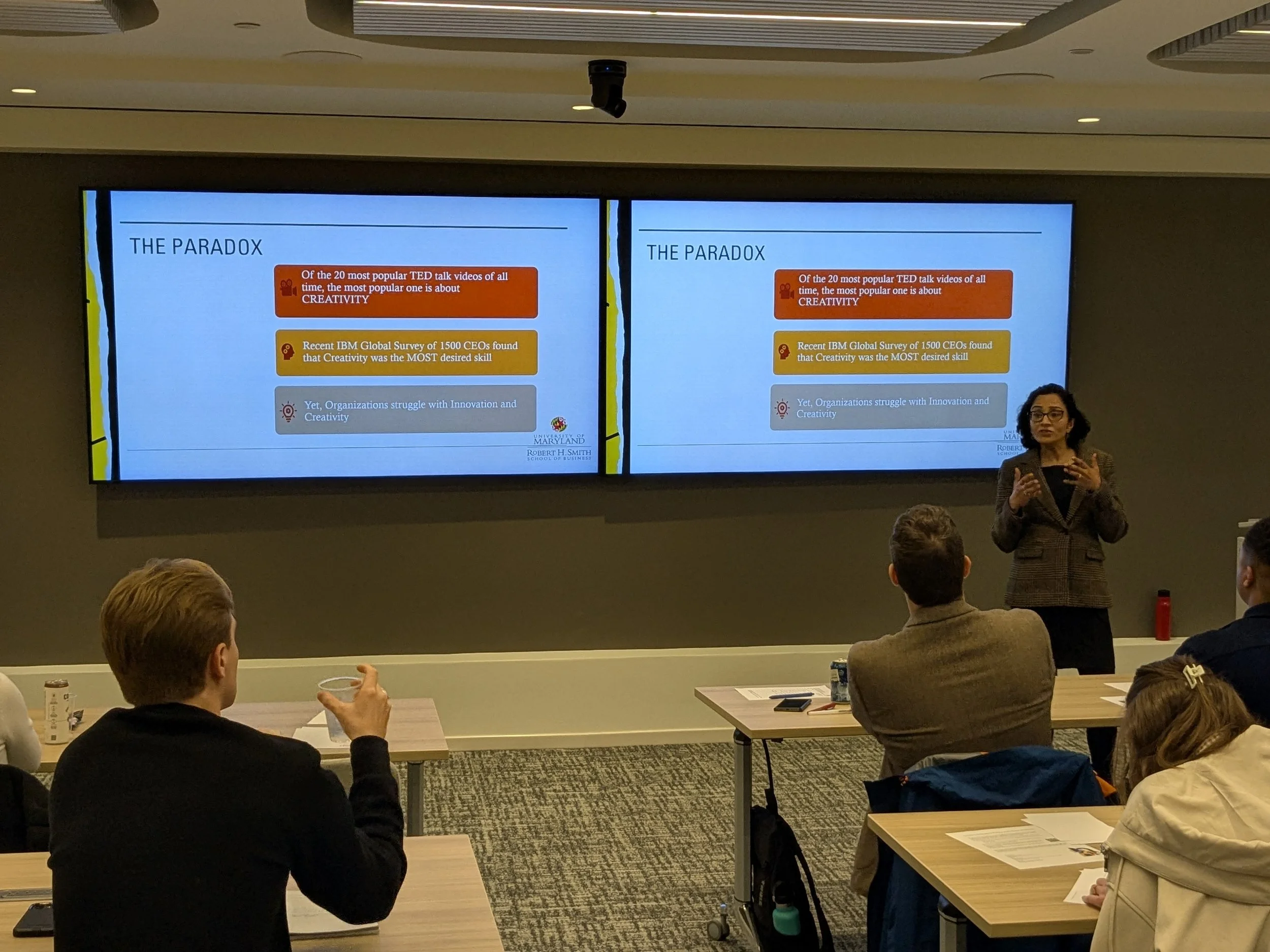
Act 2: Leadership Outward: Creative Ideas & Leadership
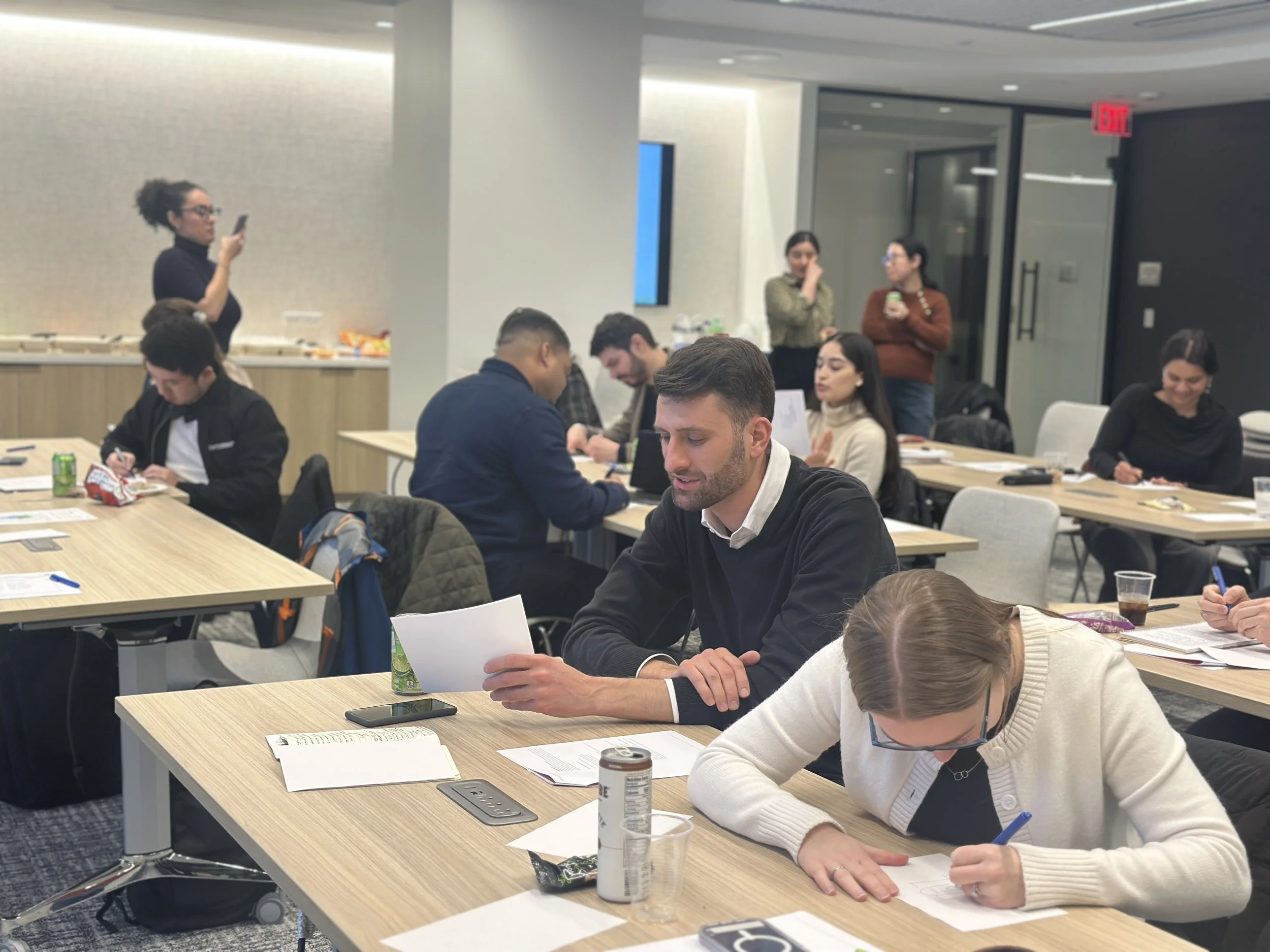
Presentation #3, Leadership Together: The Unseen Sketch, was a hands-on team-building exercise designed to demonstrate how communication and leadership styles affect outcomes. Participants were paired, with one person acting as the “Descriptor,” who verbally described a building, and the other as the “Drawer,” who attempted to sketch it without asking questions, speaking, or seeing the original image. Because feedback was restricted, the activity highlighted how tone, clarity, and word choice strongly influence understanding and how quickly miscommunication can occur. In a second round, two different leaders described the same building to a group, showing that even with identical information, different leadership approaches produced noticeably different results. The exercise illustrated how hierarchy, assumptions, and lack of feedback loops impact collaboration, especially in design-focused professions where people must interpret another person’s vision. Overall, the activity reinforced that effective leadership depends on intentional listening, clear verbal guidance, and opportunities for feedback.
Megan Davey & Andrea Nichols
Act 3: Leadership Together: The Unseen Sketch
Thank You to the 2026 Session 1 Sponsors